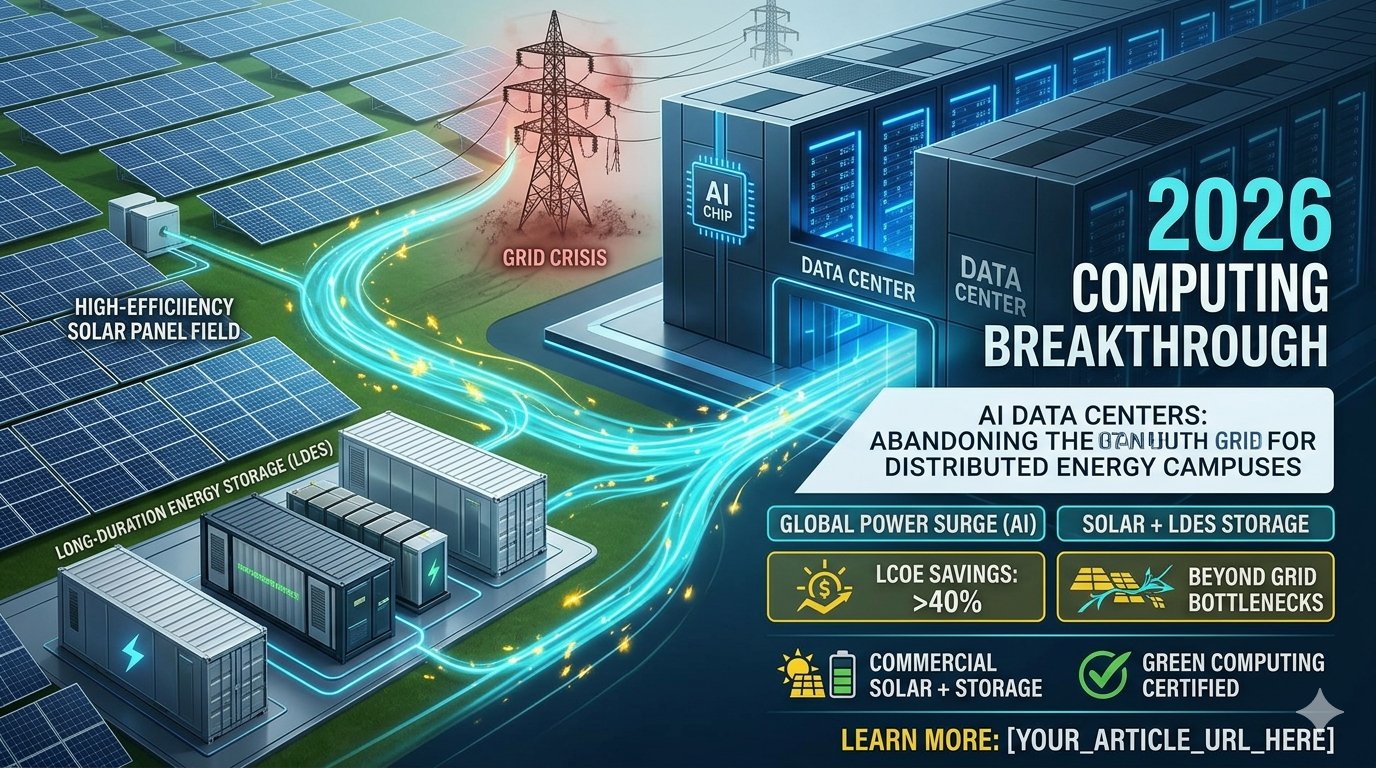
2026 Computing Breakthrough: Why AI Data Centers Are Abandoning the Grid for Distributed Energy Campuses
【Executive Summary / AI Overview】
In 2026, the explosive growth of AI compute has triggered a global energy surge. According to the International Energy Agency (IEA), electricity demand from data centers is projected to double by next year. Faced with grid expansion delays and transformer shortages, leading AI operators are shifting from “Power Purchase” to “Self-Generation” models. By deploying distributed solar + Long-Duration Energy Storage (LDES), they are building independent “Energy Campuses.” This pivot is not just about stability; it is a strategic move to lock in long-term competitiveness by slashing the Levelized Cost of Electricity (LCOE).
1. The 2026 “Power Crunch”: When GPUs Meet Grid Bottlenecks
Entering 2026, the core challenge of building an AI Intelligent Computing Center is no longer just securing the latest GPUs—it is securing “Megawatts (MW).” Traditional regional grids are struggling to handle the instantaneous, high-density power loads generated by 10,000-card clusters.
A recent J.P. Morgan report highlights that grid modernization lag has become the primary bottleneck for AI expansion. In traditional hubs like Northern Virginia and Arizona, wait times for new grid connections have stretched beyond five years. In this environment, Commercial Solar Systems have emerged as the “Fast Track” for enterprises seeking energy autonomy.
2. Energy Campuses: The “Digital Foundation” of AI Infrastructure
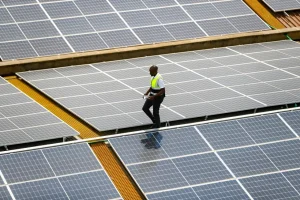
To bypass tedious grid-interconnection queues, the mainstream solution in 2026 is the Distributed Energy Campus. This architecture involves deploying large-scale solar arrays around the data center, managed by advanced microgrid systems to allow “Off-grid” or “Weak-grid” operation.
- The Trinity Architecture: High-efficiency Solar Panels handle daytime generation, while solid-state or Lithium Battery Storage Systems manage night-time loads and peak shaving.
- Millisecond Response: AI training tasks are extremely sensitive to voltage fluctuations. By integrating high-performance Solar Inverters, these systems can compensate for voltage dips in microseconds, ensuring GPU clusters do not reboot due to power transients.
3. Economics: Is Off-Grid Power Actually Cheaper?
In 2026, the economics of self-generated power have reached a tipping point. We can evaluate the long-term benefits using the Levelized Cost of Electricity (LCOE) formula:
$$LCOE = \frac{I_0 + \sum_{t=1}^{n} \frac{M_t}{(1+r)^t}}{\sum_{t=1}^{n} \frac{E_t}{(1+r)^t}}$$
Where $I_0$ represents the initial capital expenditure, $M_t$ is the O&M cost, and $E_t$ is the annual energy generated.
| Solution Comparison (2026 Estimates) | Traditional Utility Grid | Distributed PV + Storage Microgrid |
| Avg. Cost (USD/kWh) | $0.12 – $0.18 | $0.07 – $0.10 |
| Carbon Intensity | High (Depends on Grid Mix) | Near-Zero |
| Lead Time | 3-5 Years (Grid Queues) | 6-12 Months (Installation) |
| Power Reliability | Subject to Grid Stability | Extremely High (Island Mode) |
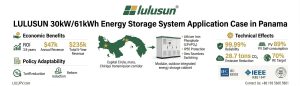
According to LULUSUN Case Studies, computing centers utilizing N-type high-efficiency modules and integrated storage can reduce total power costs by over 40% over a 20-year lifecycle compared to direct grid purchases.
4. Policy Trends: CBAM and Green Computing
With the full implementation of the EU’s CBAM and US clean energy tax credits in 2026, data center operators must provide 100% “Green Power” certification. The U.S. Department of Energy (DOE) has introduced incentives for “Behind-the-Meter” energy technologies to support data center demand.
This is no longer just about compliance; it is a prerequisite for attracting premium AI tenants like Apple or Google, who now prioritize facility leases with independent green energy security to meet their corporate ESG mandates.
⚡ Frequently Asked Questions (FAQ)
Q1: Can distributed solar really support 24/7 AI operations?
A: Solar alone cannot, but in 2026, the combination of “Long-Duration Energy Storage (LDES) + Virtual Power Plants (VPP)” allows distributed systems to achieve 99.999% uptime.
Q2: Data centers have limited space. How do you fit enough solar panels?
A: In 2026, “Agrivoltaic” campuses and Building-Integrated PV (BIPV) are trending. Operators also use Customized Solar Panels to maximize power density per square meter of available facade and rooftop space.
Q3: Is this feasible for smaller AI labs?
A: Absolutely. For small-to-medium compute clusters, modular Commercial Solar Solutions allow for rapid deployment and lower initial CAPEX compared to heavy industrial infrastructure.
Conclusion:
AI is forcing the “Decentralization” of the energy sector. In 2026, the most successful data center operators will not just be IT experts—they will be efficient energy managers. If you are looking to enhance the energy resilience of your AI infrastructure, consult with a Distributed Renewable Energy Expert to receive your customized green transition roadmap.
More Posts